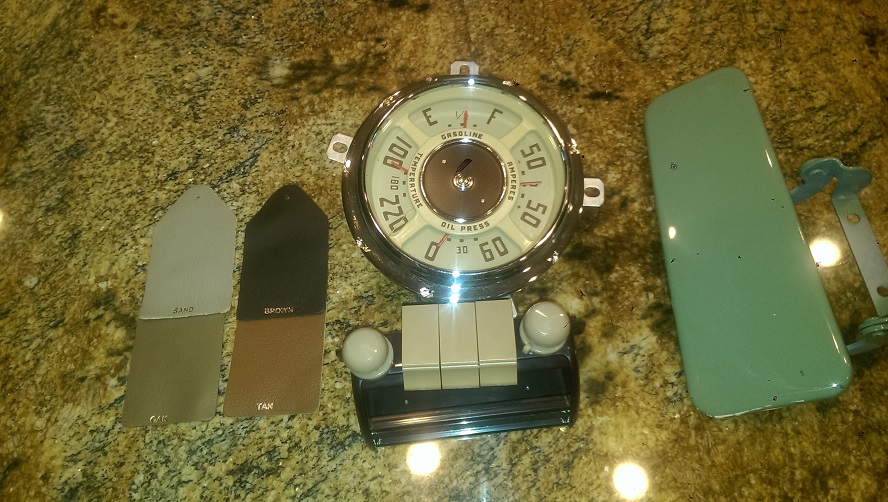
The gauge I have says the max temp is 220F. Previous LS engines I've had with stock thermostats ran about 190-195F. I realize that the factory gauge will have some limitations in an overtemp situation, so I'll have a secondary gauge driven off the OBD2 port and displayed on a tablet or phone in the cab.
Mike, both ports on the LS head have M12x1.5 threads, which makes the major diameter of the threads on the sensor about .470"
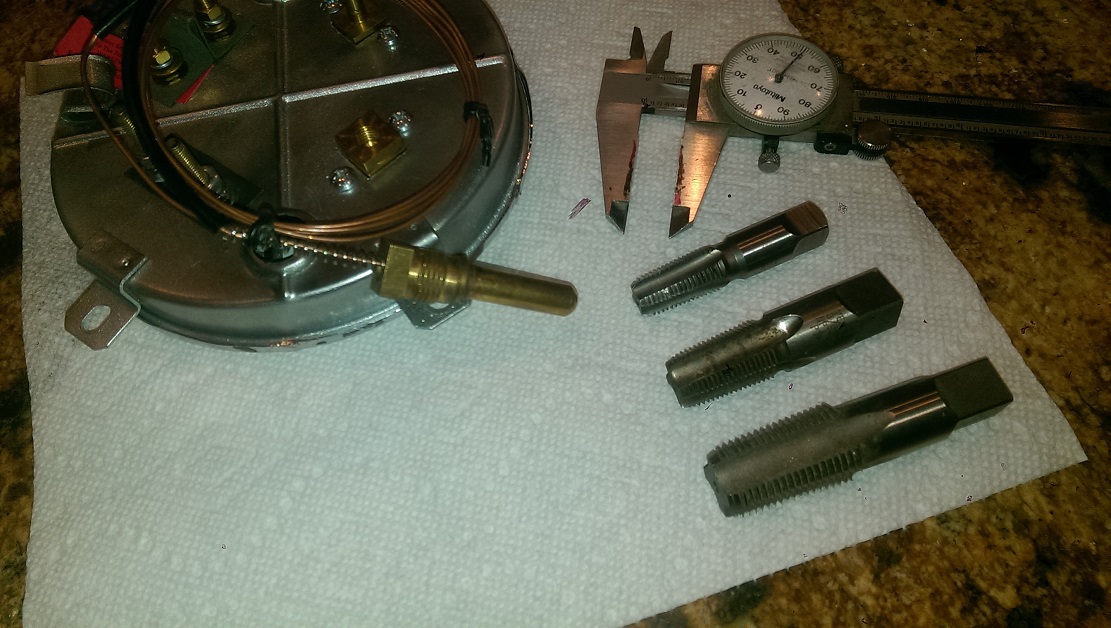
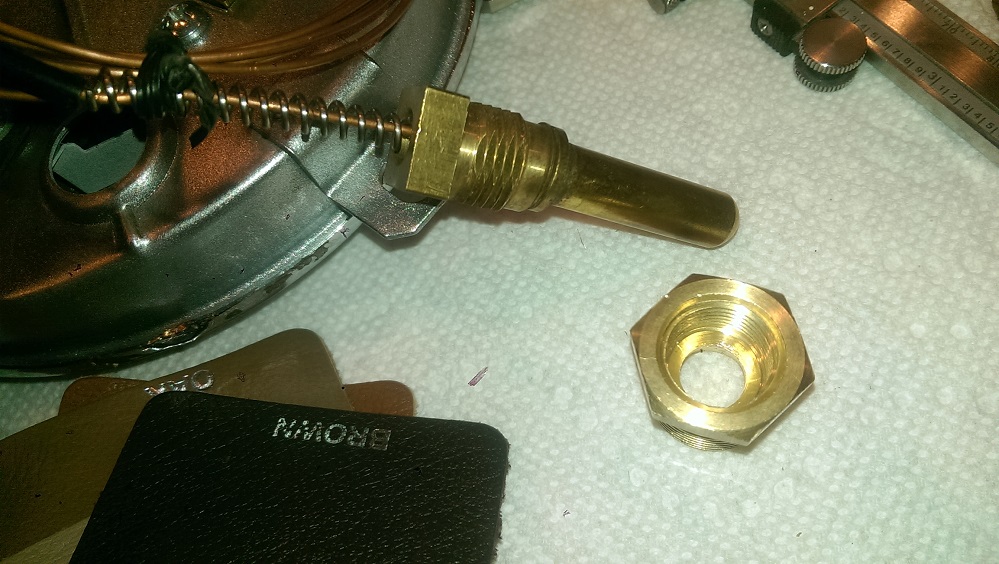
The threads on the ether bulb sensor from the '49 are 1/4" NPT, and the major diameter of the threads measures .550"
So with the ether bulb's threads larger than the LS head's threads, there's no possibility of an adapter.
So I've kind of shot myself in the foot. I can't get a drill into the engine bay to punch the hole out for the sensor in the head so it will take a 3/8" NPT bush down to 1/4" NPT. Even if I could, it doesn't look to me like the ether bulb seals on the threads, but might require a stepped hole.
Here's a picture of the back of the gauge and the bulb, along with pipe taps from 1/4" to 1/2"
A couple of possible work-arounds I've thought of.
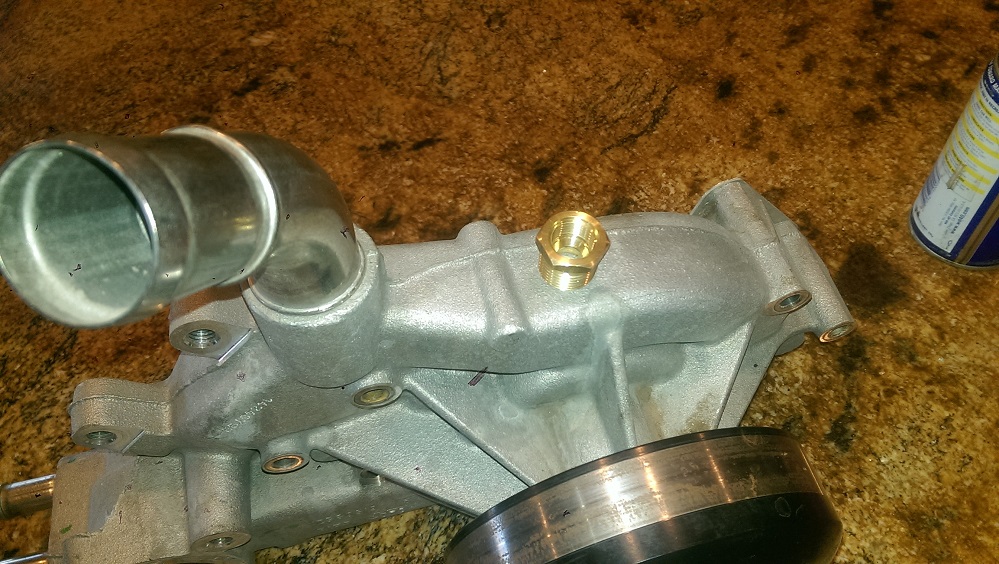
The water pump is very easy to remove, and I could machine a boss for the water temp sensor on the engine side of the thermostat pretty easily - but I need to know what the hole looks like and how the bulb seals. I ordered an extended capillary, but I'd need to check to make sure it will reach the water pump.
Another possibility is to take one of the freeze plugs out of the back of the head and machine an aluminum plug to replace it and put the boss for the temp bulb sensor in that. The rear of the head is very accessible from the removable tunnel cover from inside the cab. I'd o-ring the freeze plug adapter and put it in with some sealer. For 'belt and suspenders', I'd also make a mechanical retainer using the bolt holes already in the heads. This is a bit of a 'science project' that I'd like to avoid, and would only go this approach if the capillary tube wasn't long enough to reach the water pump.
Either way, I need to know what the hole looks like in the original engine and how it seals up to be water-tight.