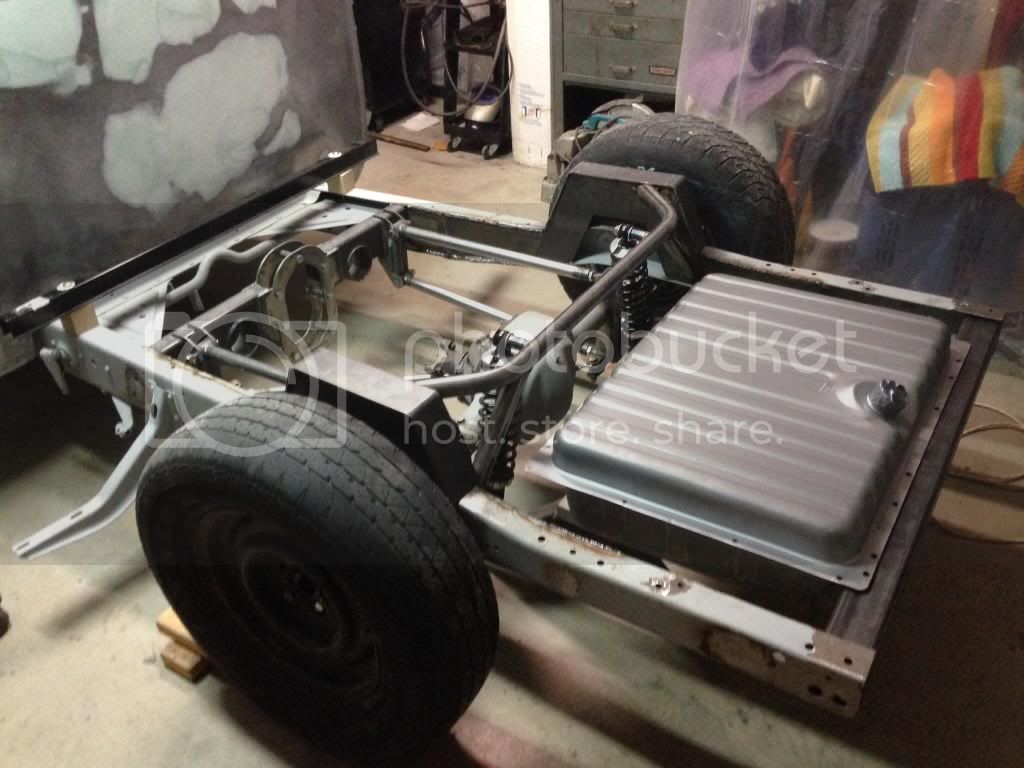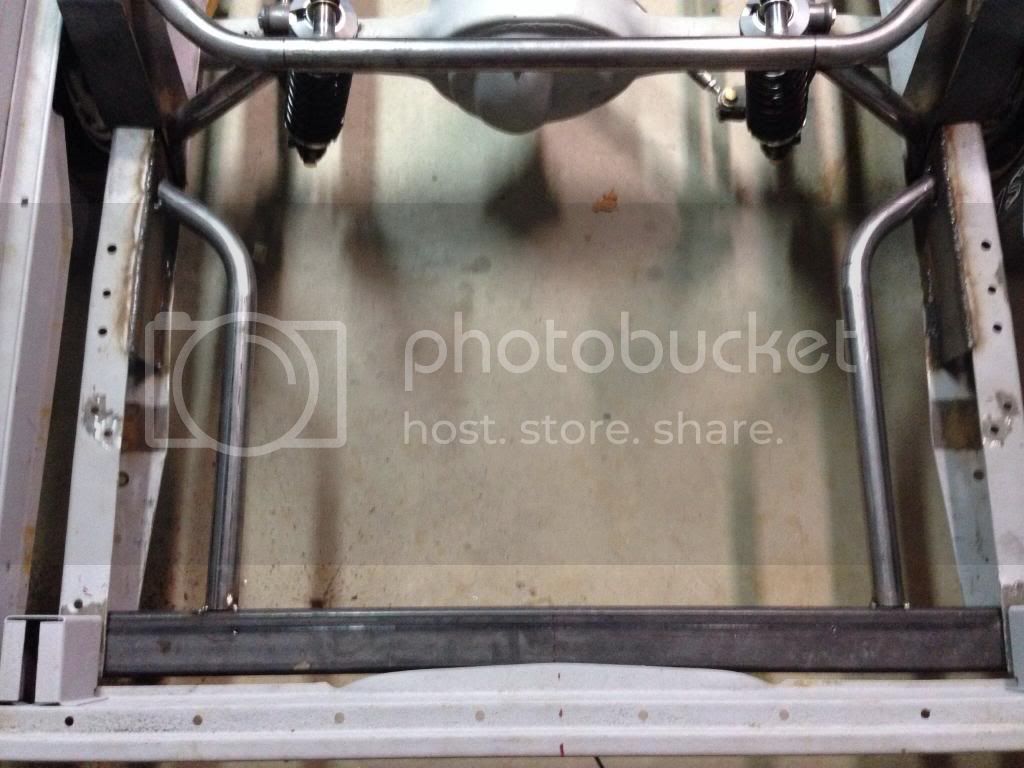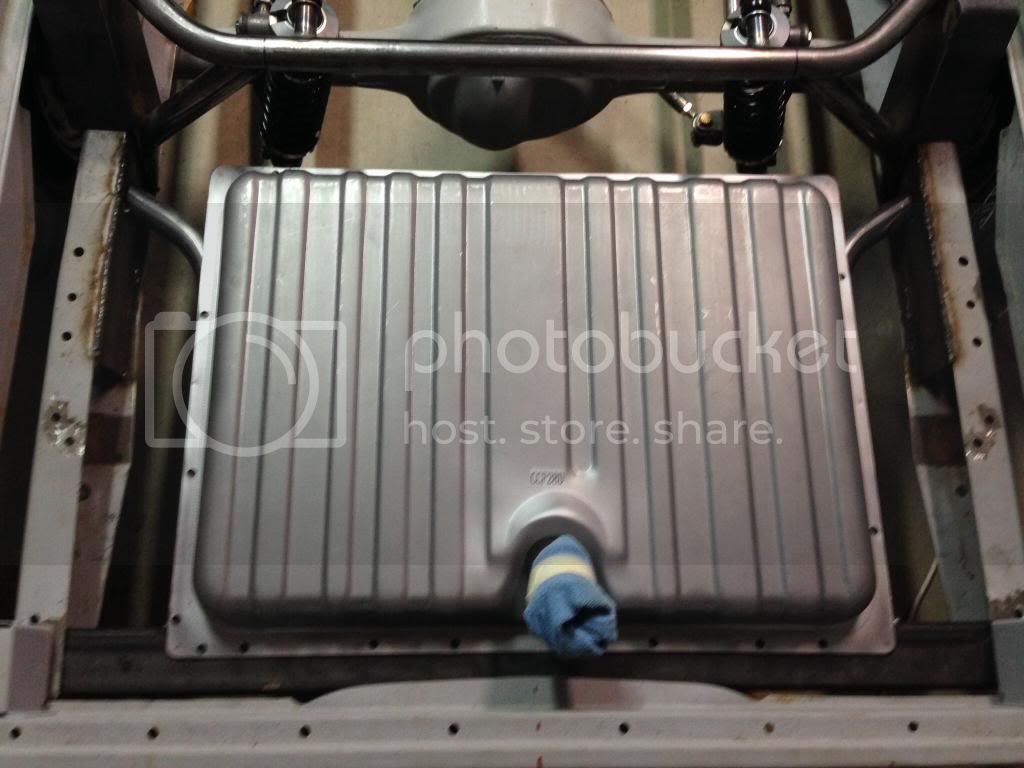

Looking good Rico.
I'd like to model the diagonal link in AutoCAD Inventor and run a stress analysis on it, just for $hits and giggles.
I've read some negative stuff on the internet about using diagonal link on the street, like here: http://67-72chevytrucks.com/vboard/showthread.php?t=187382
But I also see a bunch of folks selling them for street use.
To me it just seems to reason that with the long diagonal bar there should be some pretty large loads at the ends of the link, and pretty large buckling loads on the link itself. I've been wrong many time before though (ask my wife) so the analysis should help me wrap my head around what the loads really are.
If you're up for it, could you get me some dimensional information on your rear suspension?
A (see photo below)= 29"
B (see photo below)=26 1/4"
C (see photo below)= 35 1/2"
D (see photo below)=9 1/4"
E (see photo below)=6 1/4"
Four link bar diameter =1 1/4"
Four link bar thickness = guessing 1/4"
4 link no HEIM JOINTS all polyurethane bushings, Bushing thread dia. 5/8" an bar hole 5/8" and only one side adjustable which is at the rear end,
Four link heim joint through bolt diameter = N/A
Four link heim joint thread diameter = N/A
Diagonal link bar diameter =1"
Diagonal link bar thickness =1/4"
Diagonal link heim joint through bolt diameter =1/2"
Diagonal link heim joint thread diameter =1/2"
Thickness of diagonal link bracket that attaches to four link bolt = 1/4"
Man Roadster your killing me with this stuff!
Also I'm not building this truck for hot rodding, I'm building a nice street Rod and building it to get good gas mileage. So NO Burn Outs, no driving at Mach 1, it's going to be a cruiser.

Last edited: